Packaging sustainability is one of the most debated topics in the beverage industry. Glass is often perceived as the “greener” option, while plastic is frequently criticised. The reality, however, is far more nuanced.
At MANZI Water, we believe sustainability should be guided by evidence, local conditions, and real-world outcomes, not assumptions.
In this blog, we explore the plastic vs glass debate in a South African context and explain why responsibly managed Polyethylene Terephthalate (PET) packaging is often the more practical environmental choice.
Why Glass Is Often Seen As The Greener Choice
Glass is made from natural raw materials, feels premium, and can be recycled without losing quality. These characteristics have contributed to the widespread belief that glass bottles are always better for the environment.
However, environmental impact cannot be judged on material perception alone. To understand sustainability properly, the full life cycle of packaging must be considered.
Life-Cycle Thinking Changes The Conversation
Life-cycle assessments look at the total environmental footprint of packaging, including raw material extraction, manufacturing energy, transport, use, reuse, and end-of-life recovery.
According to research published by the United Nations Environment Programme, the environmental performance of beverage packaging varies significantly depending on weight, transport distances, reuse rates, and recycling outcomes, rather than material type alone.
When these factors are assessed together, the comparison between PET plastic vs glass becomes far more balanced.
Weight And Transport Matter More Than Most People Realise
One of the biggest differences between PET plastic vs glass bottles is weight.
Glass bottles are significantly heavier than PET bottles, which means:
- Higher fuel consumption during transport;
- Increased carbon emissions per litre distributed; and
- Reduced efficiency across national supply chains.
In a country like South Africa, where products often travel long distances between production sites, distribution centres, and communities, transport emissions play a major role in overall environmental impact.
Multiple life-cycle studies show that lightweight PET packaging often performs better than single-use glass in this area, particularly where distribution is widespread.
Refillable Glass vs Single-Use Glass Is A Critical Distinction
Glass packaging is not all the same.
Refillable glass systems can offer environmental benefits, but only when bottles are reused many times, transport distances are short, washing systems are efficient, and breakage rates are low. When these conditions are not met, the environmental advantage can quickly diminish.
Single-use glass bottles, by contrast, often have a higher carbon footprint than PET due to energy-intensive manufacturing and heavier transport requirements, as highlighted in several comparative packaging studies.
Recycling Reality In South Africa
Recyclability, for plastic vs glass, only matters if packaging is actually collected and recycled.
PET plastic is widely recycled in South Africa and has an established collection and processing network. It also has strong economic value within the recycling sector, supporting jobs and livelihoods. MANZI Water’s PET bottles are 100% recyclable when disposed of correctly.
Glass is recyclable, but recovery rates vary, and transport, handling, and breakage can limit recycling efficiency. What matters most is whether packaging fits into a functioning local system and is recovered in practice, not just in theory.
MANZI Water’s Approach To Responsible PET Packaging
At MANZI Water, our focus is on practical sustainability with measurable outcomes.
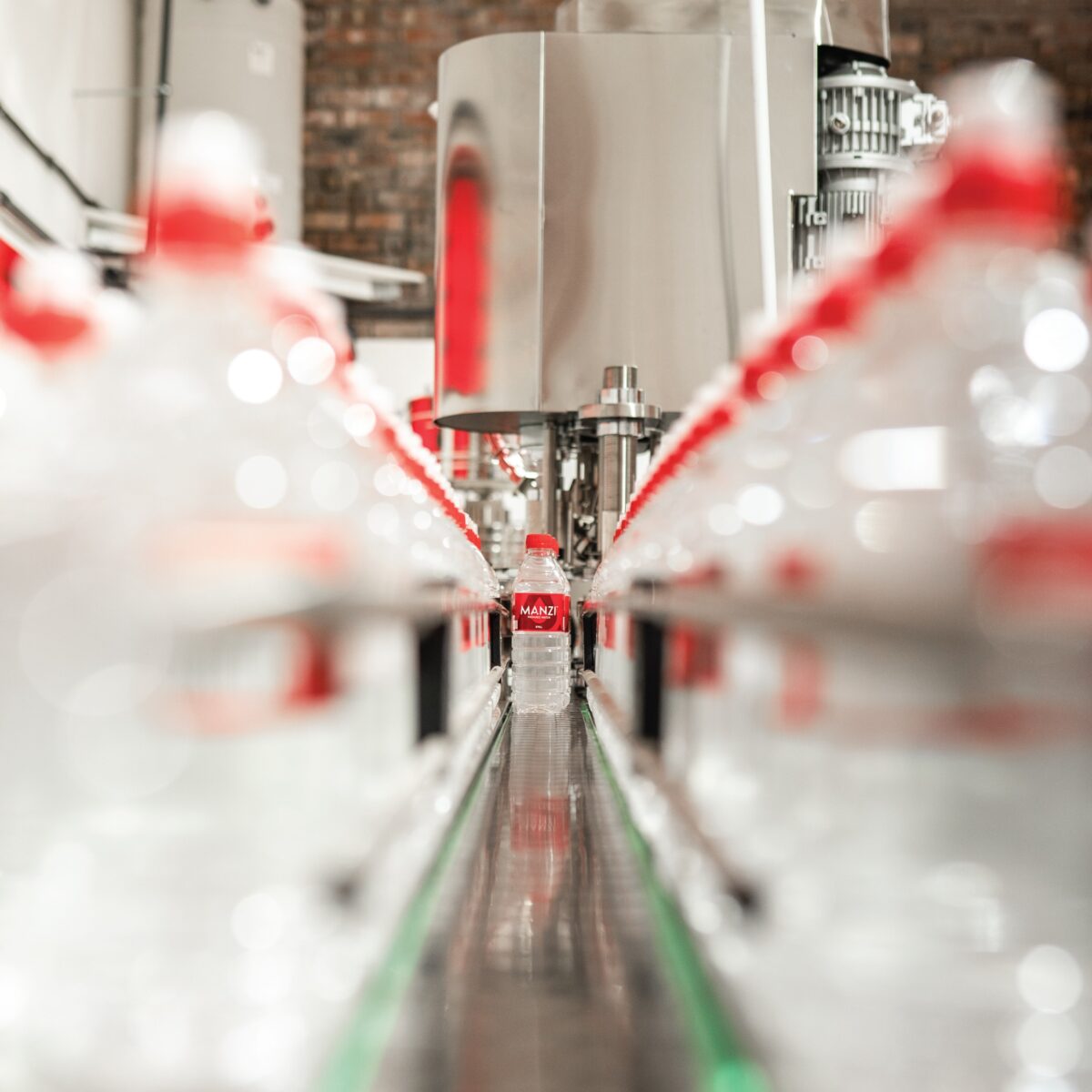
Our PET bottles are 100% recyclable and designed to work within South Africa’s existing recycling infrastructure. MANZI Water is a member of Polyco, and the packaging suppliers we work with pay the required Extended Producer Responsibility (EPR) levies on our behalf. This ensures our bottles contribute financially to national recycling and recovery efforts through South Africa’s recognised EPR system.
Lightweight PET packaging also helps reduce transport emissions and improve distribution efficiency across our growing national footprint.
Plastic Or Glass? The Real Answer
There is no universal winner.
Glass can be a strong option in closed-loop, refillable systems with short transport distances and high reuse rates. When it comes to PET plastic vs glass, however, PET is often the lower-impact choice for widespread distribution, especially in countries like South Africa where logistics, distance, and recycling infrastructure must be considered realistically.
The real question is not which material sounds better, but which delivers better environmental outcomes in practice.
Responsible Disposal Makes The Difference
Regardless of packaging choice, consumer behaviour plays a critical role.
MANZI Water encourages all customers to:
- Dispose of PET bottles through recognised recycling channels; and
- Support a circular economy by keeping materials in use.
Sustainability is a shared responsibility.
Sustainability is About Outcomes, Not Myths
When it comes to plastic vs glass bottles, there is no perfect packaging, only better choices made responsibly.
By combining recyclable PET packaging, participation in South Africa’s EPR system through our supply chain, and clear guidance on responsible disposal, MANZI Water remains committed to sustainability that works in the real world.
FAQs
Which lasts longer, plastic or glass?
Glass is generally more durable in terms of material lifespan, as it does not degrade over time in the same way plastics can. However, it is also fragile and prone to breaking, which can limit its practical lifespan in everyday use and transport. PET plastic, on the other hand, is designed to be lightweight, impact-resistant, and suitable for distribution, making it more practical in many real-world applications. From a sustainability perspective, longevity depends less on the material itself and more on how often it is reused and whether it is properly recycled.
Why did we stop using glass containers?
Glass containers have not been completely phased out, but their use has become more selective. In many cases, industries shifted toward materials like PET plastic because they are lighter, easier to transport, less prone to breakage, and more cost-efficient. In countries like South Africa, where products often travel long distances, these factors significantly affect fuel consumption and overall environmental impact. Glass still plays an important role, especially in refillable systems, but it is not always the most practical option for large-scale distribution.
Should I throw out all plastic containers?
No. The goal is not to eliminate all plastic, but to use it responsibly. Materials like PET are widely recyclable and form part of an established recycling system in South Africa. Rather than discarding all plastic, the focus should be on reducing unnecessary use, reusing where possible, and ensuring proper recycling through recognised channels. When managed correctly, plastic can be part of a more sustainable, circular system, especially when supported by initiatives like Extended Producer Responsibility (EPR) and active consumer participation.